
These are SANY’s published field cases from overseas sites — not Frontline installations. The savings quoted are SANY’s own figures, converted to New Zealand dollars at November 2026 exchange rates. They reflect overseas power, diesel and labour costs, so the numbers on a New Zealand site will differ.
The usual objection to electric forklifts in heavy industry is simple: they’re fine in a warehouse, but they won’t do a diesel’s job. These two sites were both running diesel, both had tried ordinary electric trucks, and both ended up on high-voltage lithium.
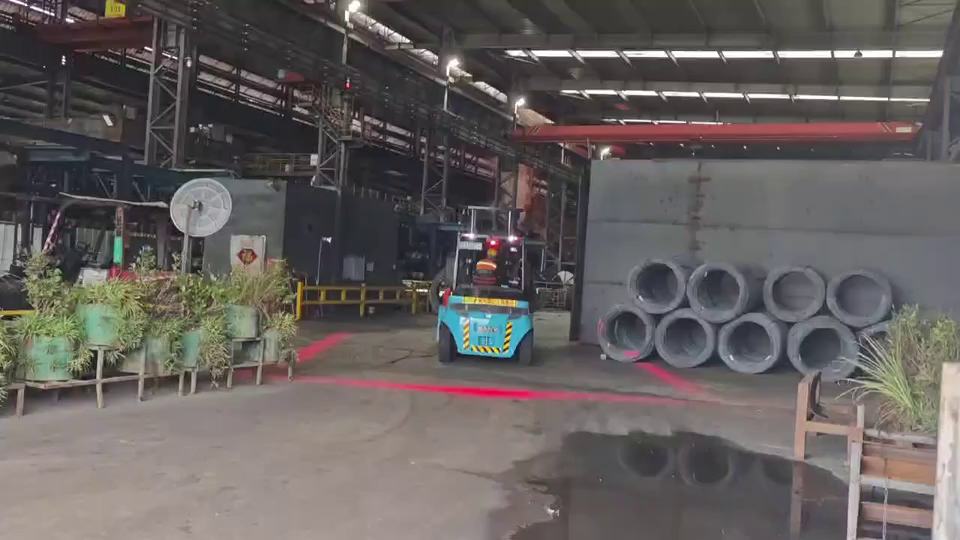
Site one: a panel plant
A large timber-panel processor moving heavy board packs through wood dust, on a site set up to run 24 hours a day (the trucks average more than 12 hours daily).
The problem. The diesel trucks were heavy on fuel and filled the buildings with exhaust. Conventional electric trucks had been tried and found underpowered, and too slow to charge for the shift pattern.
What went in. SANY’s 4-tonne F7, built on a high-voltage lithium system with SANY’s eight-in-one integrated drivetrain and a one-hour fast charge.
What happened. SANY puts the saving at about NZ$11,000 per machine per year at 4,000 operating hours, and describes the F7 as a straight replacement for the diesel trucks it took over from.
Site two: an aluminium works
A manufacturing plant where the workshop sits at around 50°C and the forklifts carry heavy loads around the clock.
The problem. Diesel was expensive to run and maintain. Standard electric trucks overheated and cut their own power to protect themselves, which is no use halfway through a shift.
What went in. SANY’s C7, with liquid-cooled thermal management for the battery and drive, a one-hour fast charge, and IP67 sealing on the core electrics.
What happened. The trucks run 24 hours a day at 50°C. SANY reports maintenance costs down by about 30%, worth roughly NZ$5,000–8,000 per machine per year.
Do they last?
Fair question for a newer brand. SANY’s launch material tracks three of its early machines still at work:
- A 3-tonne truck delivered in 2022 has passed 23,800 hours, averaging more than 15 hours a day. Five years of maintenance has cost about NZ$3,600, with no battery, motor or controller faults — the money went on cylinders, tyres and wear parts.
- A 2.5-tonne truck from 2023 has passed 18,600 hours on two shifts, again with no battery or controller failures.
- A 3.5-tonne truck from 2024 has passed 11,600 hours of continuous work on wear parts and routine servicing alone.
What it means here
Heat, dust, heavy loads and long shifts describe plenty of New Zealand sites — sawmills and panel plants, foundries, steel and heavy manufacturing. What made the difference in both cases wasn’t “electric” as such. It was a high-voltage system with proper cooling and a charge time short enough to fit a meal break.
Diesel is still the right answer for some jobs, and we sell those too — our Zone diesel range runs from 2 to 20 tonne. But if fuel, fumes or maintenance are what’s hurting, it’s worth running the numbers on your own site.
See the SANY range or tell us what you’re lifting and we’ll work it through with you.